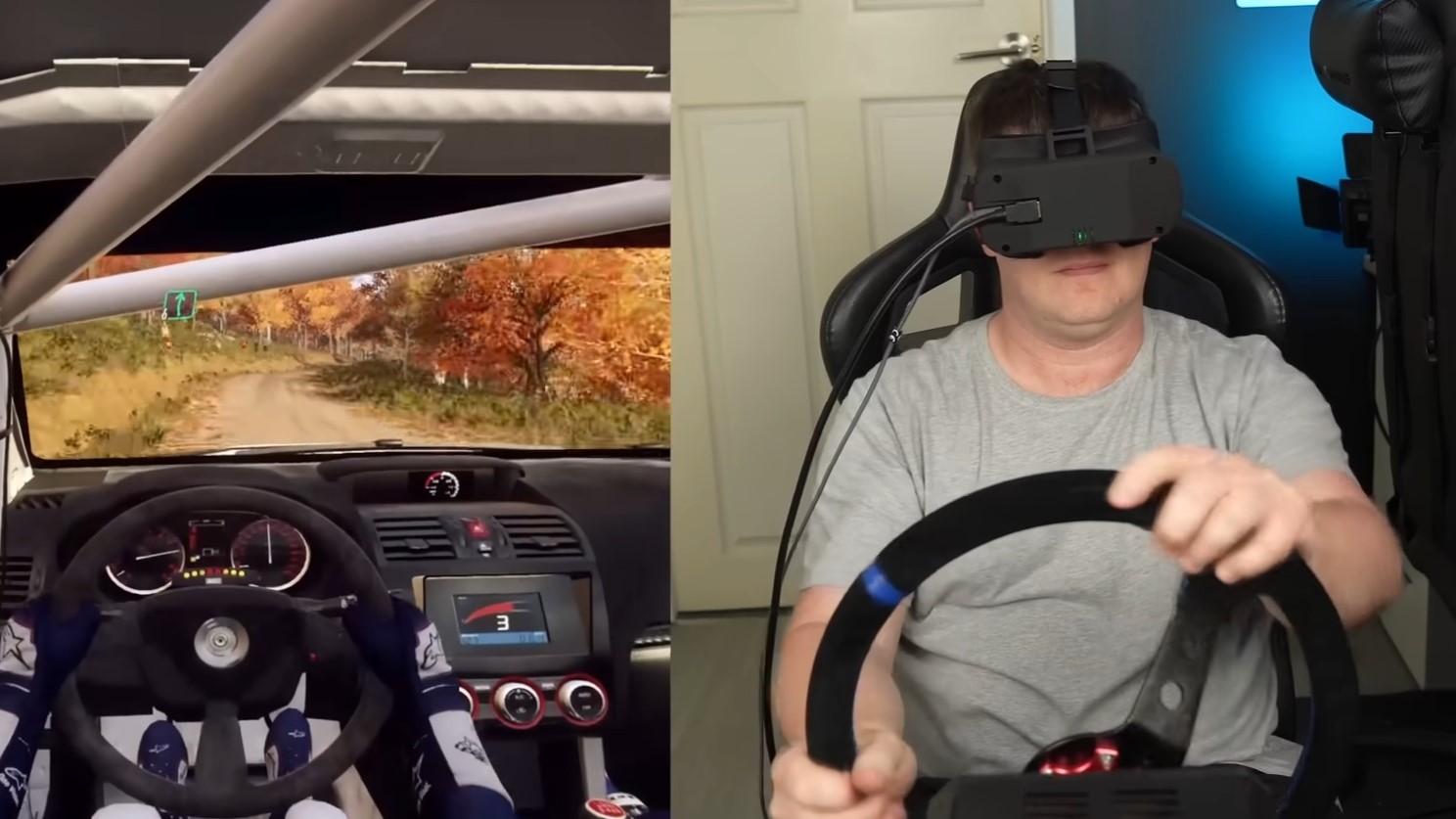
DIY YouTuber CNCDan has uploaded a video of his latest project — a VR headset, which, besides the 3D-printed parts, cost him about $150. He also made all the resources needed for the project open source.
It’s always cool to see such projects, and I was discussing about the topic just yesterday.
… but please, don’t spend $150 on that. This is limited has it has :
no controllers (and gamepads aren’t spatial),
no hand tracking (which would be spatial),
no 6DoF, so you can’t move your head or body around, just turn your head around
a very limited software stack, e.g. no OpenXR (AFAICT),
a cable to be plugged to a computer, i.e. it’s not standalone
so it’s basically a more open but not standalone version of the Oculus Go. For context the Go is from 2018 and back then was $200 while being standalone. Note also that the Go is rootable, cf https://developers.meta.com/horizon/blog/unlocking-oculus-go/
There are also other DIY VR HMDs, e.g. https://github.com/relativty/Relativty from 2020 which similar limitations. In fact this made so much buzz back then the founder managed to ride the hype and make (sadly) a VC funded startup. I say sadly because the initial project was all open VR and openness but once the money was locked-in… well I let you check.
So… again this is VERY cool to build but please do not consider this anything but a way to learn. If you do want to play with VR with a limited budget consider instead an accountless (meaning no Meta involved) second hand Meta 2 then Alvr or WiVRn (cf https://lvra.gitlab.io/ for more).
Note that despite the lack of OpenXR support by relying on https://github.com/relativty/Relativty#14-software-setup they might support some SteamVR games. That said, again, it’s 6DoF 3DoF and outdated so which actual games would be fun, not just playable, is a different question.
There was a relativty fork vis3r that started writing a monado driver. Not quite complete but it could be a starting point for anyone wanting to make one.
I think it’s good enough for learning and doing something weird but Meta Quest 1 or 2 cost less (just checked 2nd hand local website and saw a few for 100€) and require 0 hardware work while providing 6DoF (leaning just a tad in your cockpit? Huge difference) and higher refresh rate.
Again, it’s amazing to tinker but unless it’s part of a both technical and ethical adventure then I believe there are better options out there already.
Those who want to use vr will buy, sometimes it’s not about destination but about the journey. And this can inspire someone to further improve on design and maybe makes it even more user friendly, cheap and with no strings to shitty corpos.
I second utopiah’s point, if assembling one with your own hands sounds like fun to you, go for it. But a second hand Reverb G2 from ebay will almost certainly be both cheaper, and better for using it in almost every way, it would even have significantly higher resolution.


It’s always cool to see such projects, and I was discussing about the topic just yesterday.
… but please, don’t spend $150 on that. This is limited has it has :
so it’s basically a more open but not standalone version of the Oculus Go. For context the Go is from 2018 and back then was $200 while being standalone. Note also that the Go is rootable, cf https://developers.meta.com/horizon/blog/unlocking-oculus-go/
There are also other DIY VR HMDs, e.g. https://github.com/relativty/Relativty from 2020 which similar limitations. In fact this made so much buzz back then the founder managed to ride the hype and make (sadly) a VC funded startup. I say sadly because the initial project was all open VR and openness but once the money was locked-in… well I let you check.
So… again this is VERY cool to build but please do not consider this anything but a way to learn. If you do want to play with VR with a limited budget consider instead an accountless (meaning no Meta involved) second hand Meta 2 then Alvr or WiVRn (cf https://lvra.gitlab.io/ for more).
Note that despite the lack of OpenXR support by relying on https://github.com/relativty/Relativty#14-software-setup they might support some SteamVR games. That said, again, it’s
6DoF3DoF and outdated so which actual games would be fun, not just playable, is a different question.You mean 3dof?
There was a relativty fork vis3r that started writing a monado driver. Not quite complete but it could be a starting point for anyone wanting to make one.
Oops yes of course, thanks, fixed.
Neat, yes could be a starting point, any URL please?
https://gitlab.freedesktop.org/Anorak/monado/-/compare/main...master?from_project_id=2685 Pretty old code…
Old yet a starting point nevertheless so still quite useful, thanks for the pointer
But can I watch porn
If you go down that path check https://buttplug.io/ because the fun does not have to stop with just vision!
you know when you don’t click the link but its so well named that you probably already know exactly what it is and what features it has?
Believe me it’s even more than you imagine!
The kraken comes.
Still good enough for driving and flying sims.
I think it’s good enough for learning and doing something weird but Meta Quest 1 or 2 cost less (just checked 2nd hand local website and saw a few for 100€) and require 0 hardware work while providing 6DoF (leaning just a tad in your cockpit? Huge difference) and higher refresh rate.
Again, it’s amazing to tinker but unless it’s part of a both technical and ethical adventure then I believe there are better options out there already.
Those who want to use vr will buy, sometimes it’s not about destination but about the journey. And this can inspire someone to further improve on design and maybe makes it even more user friendly, cheap and with no strings to shitty corpos.
I second utopiah’s point, if assembling one with your own hands sounds like fun to you, go for it. But a second hand Reverb G2 from ebay will almost certainly be both cheaper, and better for using it in almost every way, it would even have significantly higher resolution.